
At the 2021 China (Anhui) Science and Technology Innovation Achievements Expo, the circulating fluidized bed coal gasification (CGAS) technology developed by the Institute of Engineering Thermophysics, Chinese Academy of Sciences (CAS), drew strong interest from the industry. CAS Hefei Coal Gasification Technology Co., Ltd. (ZHGAS), the company responsible for industrializing the technology, highlighted CGAS as a high-throughput, high-density solution that enables low-cost, energy-efficient coal gasification. It is adaptable to a wide range of coal types, generates minimal “three wastes” (waste gas, water, and solids), and significantly reduces carbon emissions—making it a key technology for the coal chemical industry’s path to carbon peaking and neutrality.
Significant Energy Savings and Emission Reduction
According to Lü Qinggang, a researcher at the Institute of Engineering Thermophysics, CAS has conducted long-term systematic research into circulating fluidized bed technologies for the combustion and gasification of coal, alternative fuels, and waste materials. The team overcame eight core technical challenges related to energy circulation, carbon recycling, and operational reliability, leading to the successful development of CGAS. The technology effectively solves major limitations of traditional coal gasification—such as poor coal adaptability, heavy pollution, and high costs—while significantly reducing CO? emissions. It is suitable for industries including synthetic ammonia, steel, non-ferrous metals, building materials, and mechanical processing.
Industry data shows that over 40% of China’s synthetic ammonia plants still use fixed-bed gasification, producing more than 20 million tons of ammonia annually. Gasification accounts for over 60% of the total energy consumption in these plants. Replacing fixed-bed gasification with CGAS could reduce CO? emissions in the ammonia sector alone by approximately 10 million tons per year.
Breakthroughs in Industrial Application
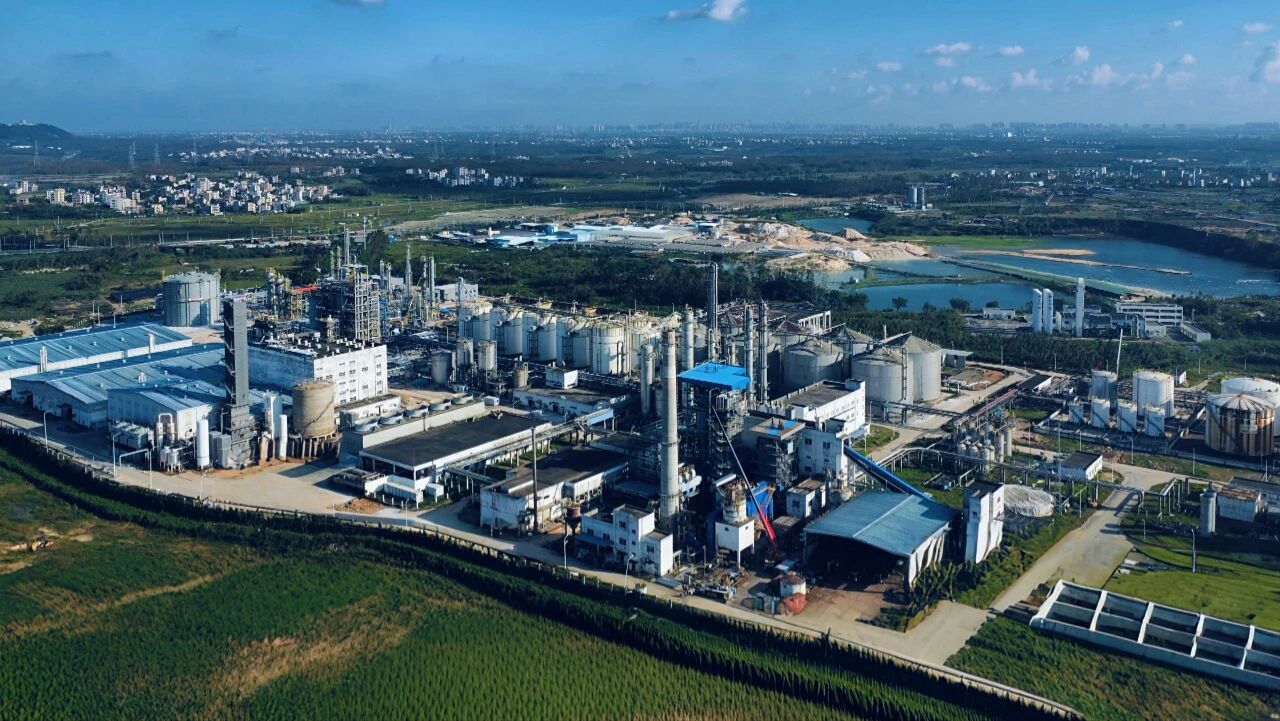
To accelerate commercialization, the Institute of Engineering Thermophysics and the Chaohu Economic Development Zone in Anhui jointly established CAS Hefei Coal Gasification Technology Co., Ltd. (ZHGAS) in 2016 to promote the adoption of CGAS. In 2020, ZHGAS built China’s first CGAS systems using anthracite and high-alkali coal, respectively, at Xinjiang Yihua Chemical Co., Ltd. and Guizhou Hongsheng Chemical Co., Ltd.—achieving a breakthrough from lab-scale to industrial implementation.
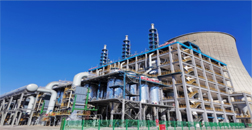
The Xinjiang Yihua CGAS gasification unit began operation in September 2020. It replaced 20 fixed-bed gasifiers with three 60,000 Nm3/h atmospheric-pressure oxygen-enriched gasifiers, solving key technical challenges posed by local high-alkali coal—such as slagging, coking, fluctuating ash melting points, and poor slurryability. As a result, ammonia production costs dropped by over 200 RMB/ton, and carbon emissions were reduced by 226 kg per ton of ammonia.
In May of the same year, the Guizhou Hongsheng project successfully commissioned a 60,000 Nm3/h CGAS unit in its 300,000-ton/year synthetic ammonia revamp project. One gasifier replaced 20 old intermittent fixed-bed units, significantly increasing automation, eliminating hazardous waste such as tar and phenolic wastewater, and achieving both cost savings and cleaner production.
In recent years, ZHGAS has completed several first-of-its-kind demonstration projects. CGAS has proven effective across various industries—including chemicals, building materials, steel, machinery, glass, and ceramics—demonstrating strong adaptability to different coal types.
Actively supporting China’s “Belt and Road Initiative,” ZHGAS is building a major project in Indonesia—the Xiangsheng oxygen-enriched circulating fluidized bed coal gasification project. The facility will include eight 80,000 Nm3/h CGAS units and, once completed, will be the world’s largest coal gasification system in the steel industry. Three units have already been completed and commissioned, resolving previous issues with noise and emissions, and significantly reducing energy consumption in lignite processing.
Going Global and Turning Gasification Slag and Ash into Resources
Building on the industrialization of CGAS, the research team at the Institute of Engineering Thermophysics is tackling the utilization of gasification slag and ash generated during coal gasification.
According to Lü Qinggang, both entrained flow and fluidized bed gasification technologies produce slag and ash with a certain calorific value. It’s estimated that as China’s coal chemical sector grows, the volume of slag and ash could reach 100 million tons per year within the next 2–3 years. Without proper handling, this would waste resources and cause serious environmental concerns.
“In fact, slag and ash from gasification can contain 30%–50% residual carbon, with calorific values ranging from 2,000 to 4,000 kcal/kg—making it a valuable resource,” Lü said. “Effectively utilizing this unburned carbon can improve overall energy efficiency, system economics, and deliver significant environmental and social benefits.”
The research team has developed preheated gasification and residual carbon combustion technologies for slag and ash, enabling large-scale resource recovery. Combined with CGAS, these solutions enable clean and efficient cascading coal utilization—supporting integrated production of gas, power, and heat—and maximizing the value extracted from coal.
ZHGAS is currently working with several enterprises in Shandong and Henan on slag and ash utilization projects, which are progressing steadily.